
Content creation costs are notoriously hard to compare. A quote for the same deliverable — a thirty-second product video, a set of campaign stills, a month of social content — can vary by a factor of five depending on who's being asked and how the question is framed. Understanding what's actually driving that range is more useful than trying to benchmark against a number.
Here's what the cost of content creation actually reflects, broken down by the factors that move the number most.

Production model: in-house versus assembled
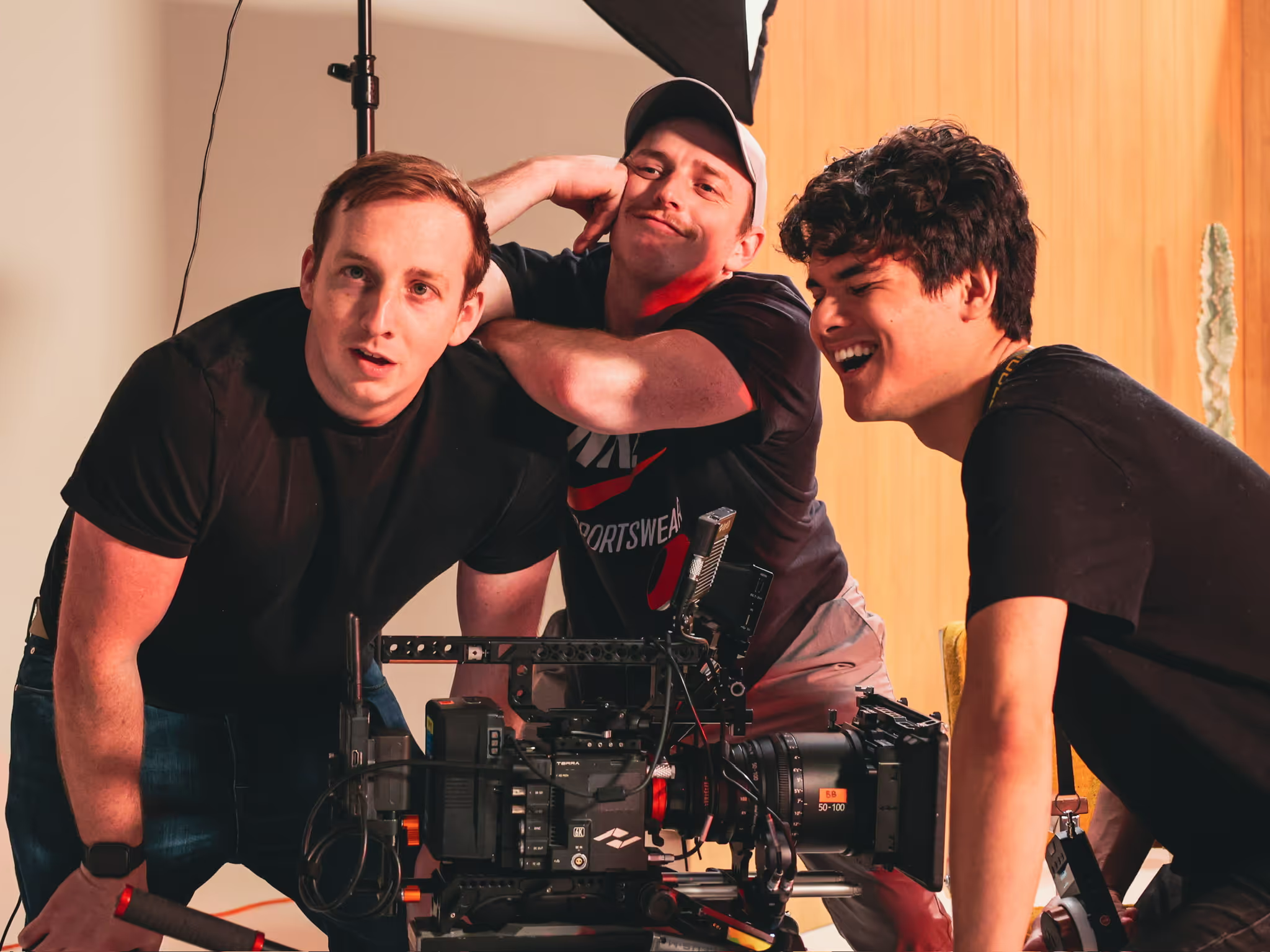
One of the largest structural cost drivers in content creation is whether you're working with a studio that owns its equipment and runs production in-house, or one that assembles a crew and rents gear per project. The assembled model introduces rental fees, coordination overhead, and variability in crew composition — costs that don't always show up as line items but accumulate in timeline and revision rounds. The in-house model tends to be more predictable and, for recurring work, more efficient per asset over time.
This distinction matters more the more frequently you're producing. For a one-time campaign, either model may be cost-competitive. For ongoing content — a monthly cadence of product videos, social assets, campaign support — the in-house model's predictability becomes a real financial advantage.
Deliverable count and format complexity
The number of final deliverables is one of the most direct levers on content cost, and one of the most frequently underestimated at the brief stage. A single hero video is priced very differently from a hero video plus three cut-downs plus six social crops plus a still image set. Each additional format adds post-production time, and that time adds up quickly.
Format planning before the shoot — deciding what you need and in what formats — is the most reliable way to control this variable. Brands that define deliverables clearly before production begins get more accurate quotes and fewer surprises on the invoice. Brands that add formats during or after production pay a premium for the flexibility.
Pre-production investment
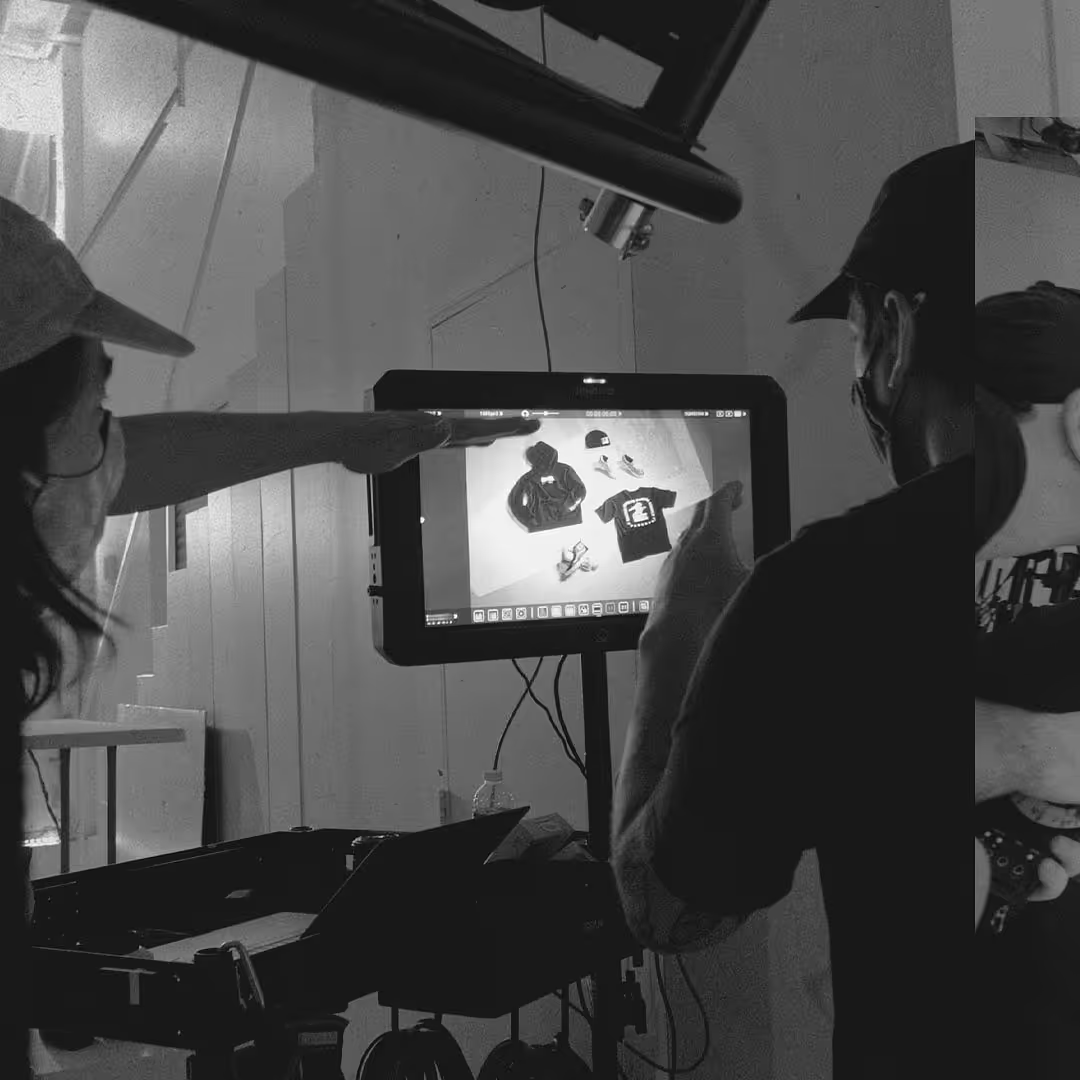
Pre-production — scripting, storyboarding, location scouting, casting, prop sourcing, creative development — is the cost driver most commonly cut and most consequentially missed. Under-investing in pre-production doesn't lower the cost of content; it transfers the cost to the shoot day, where time is significantly more expensive, and to the revision process, where unclear direction gets worked out after the fact.
Studios that include robust pre-production in their process tend to produce work that requires fewer revisions and better matches the brief. The upfront cost looks higher. The total cost is usually lower.
Project versus retainer pricing
Project-by-project content production has a higher per-asset cost than content produced under a retainer or subscription arrangement. This is true almost universally, across production models and content types. The project model charges for the setup, coordination, and ramp-up time that a retainer amortizes across a longer relationship.
For brands that need content consistently rather than occasionally, the math on retainer pricing is usually straightforward: more output for the same or lower monthly spend, with the added benefit of a team that gets better at making your content the longer they do it. The tradeoff is commitment — retainer models require the brand to brief and approve consistently, which creates an internal coordination requirement that not every organization is ready for.
Asset reuse and planning
One of the most underused cost levers in content creation is asset reuse. Every shoot produces more usable footage and imagery than what ends up in the final deliverables — b-roll, alternate angles, detail shots, behind-the-scenes content. Brands with organized asset libraries and intentional reuse strategies extract significantly more value per shoot dollar than brands that treat each shoot as a single-use event.
Planning for reuse starts at the brief stage, not the archive stage. Shooting with format versatility in mind — knowing that the hero video will also yield social cuts, that the still set will include both product and lifestyle angles, that the b-roll will serve next quarter's campaign — changes what you capture and how, at minimal additional cost.
Revision cycles
Revision rounds are a cost driver that's almost entirely within the brand's control. Projects with clearly scoped deliverables, strong pre-production alignment, and defined approval processes use fewer revisions. Projects with ambiguous briefs, unresolved creative direction, or multiple stakeholders reviewing without a clear decision-maker use more — and those additional rounds cost time regardless of whether they're billed explicitly.
The revision round isn't just a budget line. It's a signal about brief quality and internal alignment. Brands that consistently use most of their contracted revisions are usually telling themselves something about their briefing process, not about the production team's ability to execute.
What a quote actually includes
Before comparing content creation quotes, it's worth establishing what each one actually covers. Creative development, pre-production, shoot day, post-production, revisions, file delivery, and usage rights can all be included or excluded differently depending on who's quoting. A lower number that excludes several of these is not a lower cost — it's a lower scope. The useful comparison is total cost for a defined, matched set of deliverables with identical terms. Getting there usually requires more specificity in the brief than most brands bring to their first conversation with a production partner.