The criteria for evaluating a video production partner have shifted. A strong reel, a competitive rate, and a reasonable turnaround time used to be enough to make a decision. They're still necessary. They're no longer sufficient.
What brands are finding now is that the production relationships that work — the ones that produce more and better content over time — are built on different qualities than the ones that win pitches. Here's what's actually worth evaluating.

Ownership of the full stack matters more than it used to
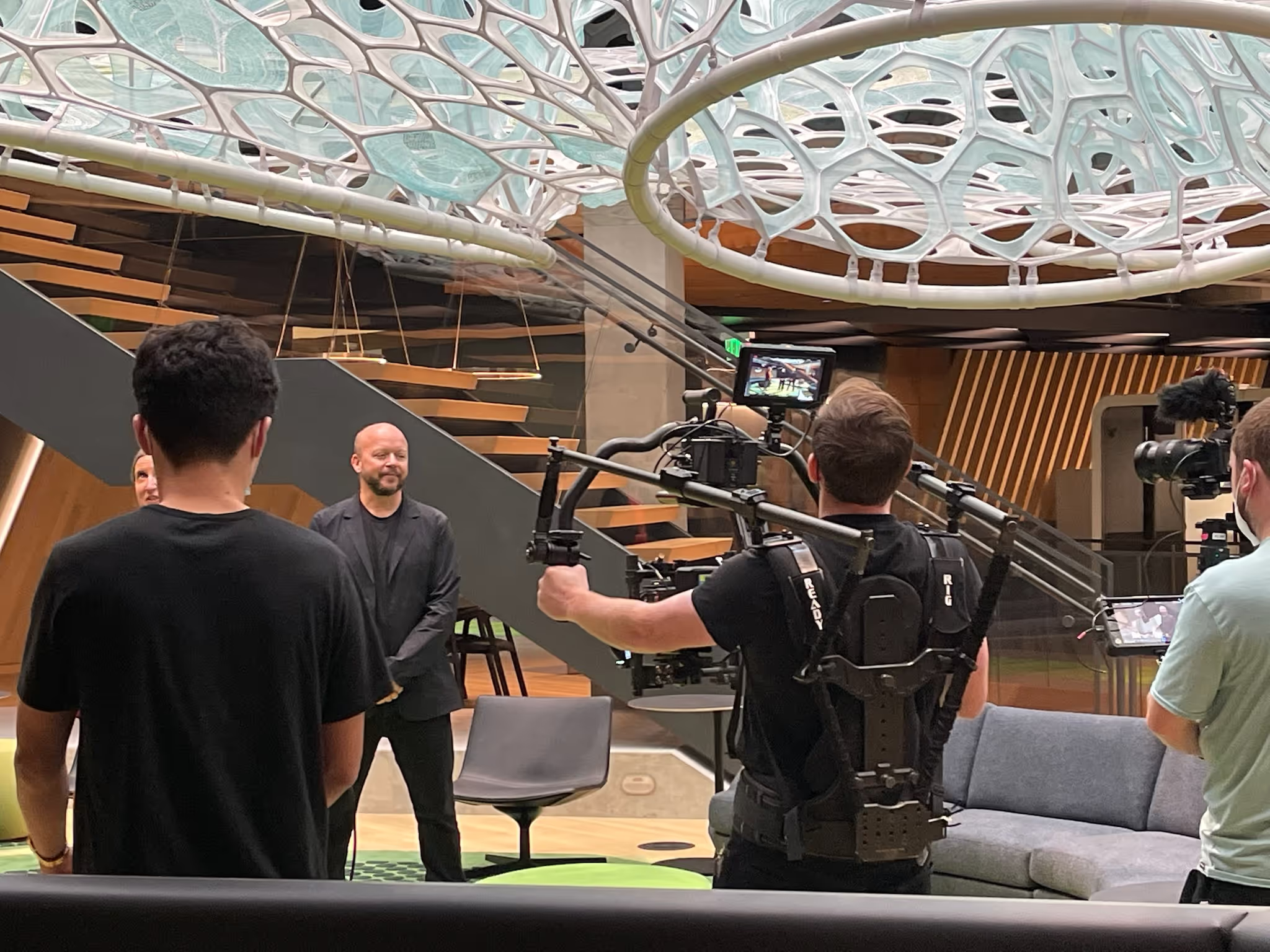
There's a meaningful difference between a production company that owns its gear and runs end-to-end in-house, and one that assembles a crew per project from a rotating freelance network. Both can produce excellent work. But they behave very differently as ongoing partners.
The in-house model tends to compress timelines and reduce the coordination overhead that makes production feel expensive even when the line items look fine. It also means consistent team chemistry — the people who understand a brand's visual language aren't different people every shoot. If you're planning to produce content on a recurring basis rather than for a single campaign, it's worth understanding which model you're dealing with before you get deep into scope conversations.
The assembled model has its own advantages — broader specialist access, more flexibility when scope changes — but those advantages only matter if you're producing work that needs them. For a steady content cadence, the in-house model usually wins on predictability.
The reel tells you less than you think
A strong reel shows range and execution quality. It doesn't show how a studio handles the gap between big shoots — the brand's day-to-day content needs that don't justify a full production budget. Ask to see work that was made quickly, on a short timeline, or as part of an ongoing retainer. That work is usually a better predictor of what the relationship will actually feel like.
Also useful: ask whether any of the reel's work was produced as part of a multi-year relationship versus a one-time engagement. Studios that appear multiple times in the same brand's content history have something specific to teach you about what they're like to work with over time. Studios whose work with any given brand begins and ends in a single campaign are telling you something different.
Principal-led versus team-led is a real distinction
At smaller studios, the principals are often the reason the work is good — and they're not always the ones producing your project once you've signed. This is worth asking about directly: who runs creative direction on your account? Who's in the edit? Who's on set? The answer shapes what you're actually buying.
A studio where the founders are consistently in the room produces different work than one where the founders are consistently in business development meetings. Neither is inherently wrong as a model, but they're different products. Know which one you're evaluating.
Subscription models are worth understanding on their own terms
Several production companies now offer subscription-based content relationships rather than project-by-project engagements. These are genuinely different structures — not just retainers with a new name. The upside is predictability: known output volume, consistent team, no per-project negotiation. The downside is that you're committing to a cadence, which requires your internal team to actually feed the pipeline with products, briefs, and approvals on a schedule.
Brands that aren't ready for that rhythm often find the model frustrating rather than efficient. Before entering a subscription arrangement, be honest about your internal capacity to brief and approve consistently. The model only works if both sides can sustain the pace.
How they handle uncertainty is more predictive than how they handle certainty
Everything in a pitch goes well. What separates production partners is how they behave when something doesn't: when the shoot day goes sideways, when the brief turns out to have gaps, when the first cut misses the mark. Ask about a specific project that didn't go the way they planned. Ask what happened and what changed afterward.
Studios that can answer this question clearly — with a specific example, real honesty about what went wrong, and an account of what they changed — are studios with genuine self-awareness about their craft. Studios that can't find an example, or that frame everything as a success story, are telling you something about how they'll handle the hard moments in your own relationship.
The best production relationships work like embedded teams
The brands getting the most value from production partners in 2026 tend to treat them less like vendors and more like a function they've outsourced. That means investing in briefing, giving real creative latitude, and resisting the urge to over-specify what they haven't yet seen. The production companies that attract those relationships are usually the ones that have strong enough conviction about their aesthetic and process that they don't need to be directed at every step.
Production quality is more accessible than it's ever been. The differentiator now is partnership quality — whether the relationship produces more and better work over time, or just executes against a brief and moves on.