The typical process for hiring a video production company goes something like this: review a handful of reels, compare quotes, pick the one that looks best for the budget. It's a reasonable starting point. It's also how brands end up with beautiful work they can't sustain and partnerships that don't survive the second project.
The variables that actually determine whether a production relationship works over time are harder to evaluate from a reel. Here's what's worth looking at instead.

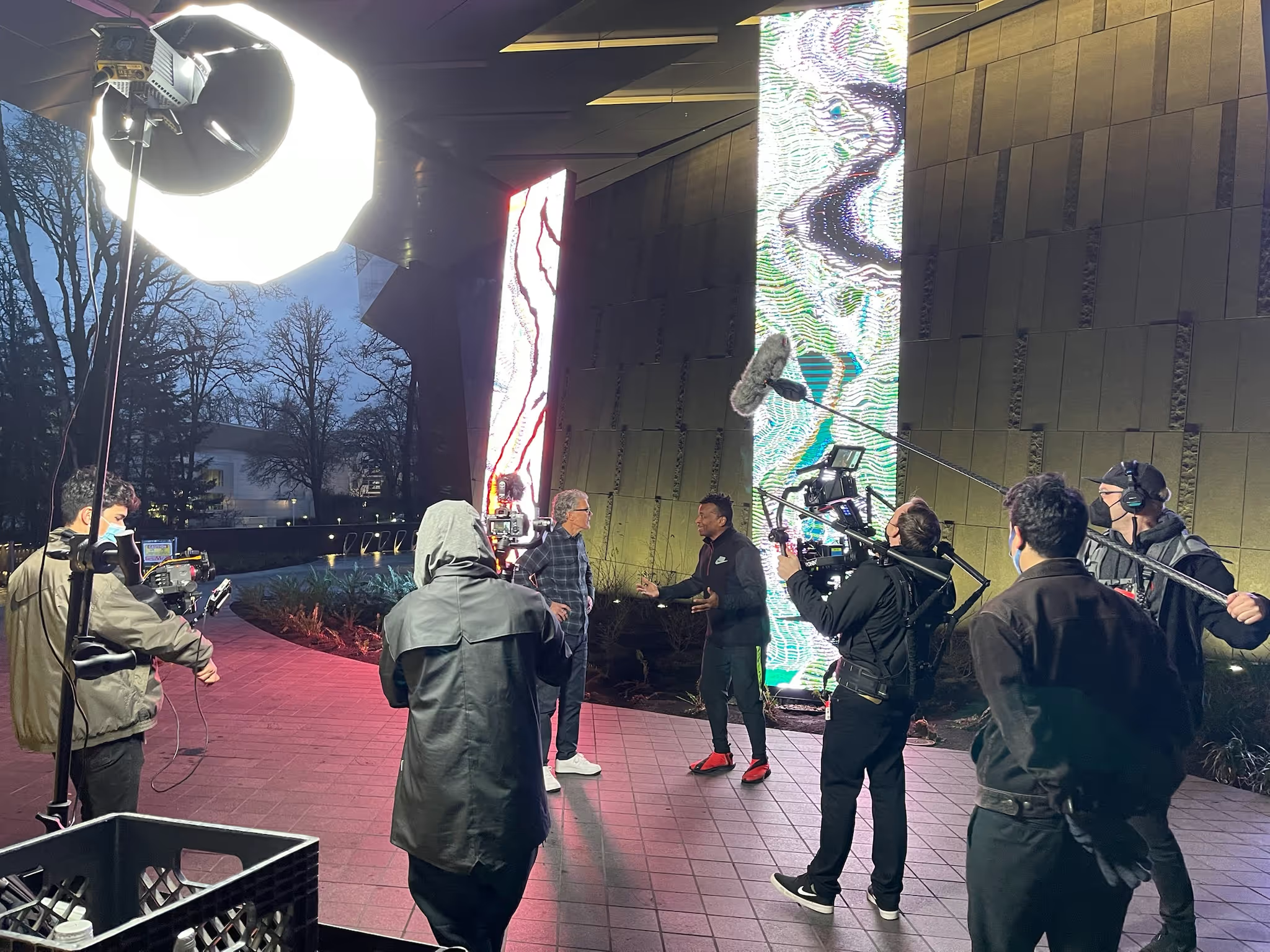
How they handle the brief
The first real signal comes before any work is produced. How a studio responds to a brief tells you whether they're going to push back when it matters, ask the right questions, or just execute what they're handed. Studios that ask good questions early — about audience, about how the asset will actually be used, about what success looks like — are usually the ones that produce work you don't have to revise three times.
The studios that don't ask questions tend to produce work that's technically competent and strategically inert. It looks fine. It doesn't do anything.
What their portfolio actually reveals
A strong reel is table stakes. What's more revealing is what's in the portfolio beyond the reel — specifically, whether you can see evidence of sustained relationships with specific brands, or just a series of one-off impressive shots.
Studios with long-term client relationships tend to show work that evolves: the same brand across multiple campaigns, content in different formats and contexts, work that's clearly been refined over time. That's different from a reel assembled from a variety of clients, each of whom appears once. The former tells you the studio is good at compounding a relationship. The latter tells you they're good at winning new ones.
Also worth noting: how they handle content at different budget levels. Ask to see work that was made quickly, on a tight timeline, or as part of an ongoing retainer. That work is usually a better predictor of what the day-to-day relationship actually feels like than the flagship campaign piece they show everyone.
In-house versus assembled
There's a structural difference between studios that own their gear and run production entirely in-house and studios that assemble a crew per project. Both models produce good work. They create very different experiences as ongoing partners.
The assembled model gives you access to specialists and flexibility on scope, but introduces coordination overhead and variability in team composition. The in-house model is more consistent — same team, same process, more predictable output — but is limited to what that team can do. If you're planning to produce content regularly rather than occasionally, understanding which model you're working with matters more than it might seem upfront.
Who actually runs your account
At smaller studios, the principals are often the reason the work is good. The question worth asking explicitly is whether those principals are actually in the room on your projects or whether they're running business development while a less experienced team handles production. The answer isn't always what the studio's pitch implies.
Ask who will run creative direction on your account. Ask who does the edit. Ask to meet them before you sign anything. A studio that can't answer those questions clearly, or that hedges, is telling you something.
Whether the relationship is built for volume or for events
Some studios are optimized for big, infrequent projects — brand films, campaign launches, hero content. Others are built to sustain a steady output of content across formats and channels. These are genuinely different capabilities, and a studio that's exceptional at one isn't necessarily good at the other.
If your content needs are ongoing — a consistent cadence of product videos, social content, seasonal campaigns — you want a partner whose production model is built for that rhythm. If you hire a studio optimized for event-scale work to fill a content calendar, you'll pay event-scale rates for assets that didn't need them, and the relationship will feel mismatched throughout.
How they talk about work that didn't go well
This one is easy to overlook and hard to fake. Ask a prospective production partner about a project that didn't go the way they intended. How they answer tells you about their self-awareness, their honesty, and their relationship to craft. Studios that can name a specific project, describe what went wrong, and explain what they changed are studios that take the work seriously. Studios that can't find an example, or that frame every past project as a success, are telling you something different.
Production relationships work when both sides are honest about what's working and what isn't. The studio's willingness to have that conversation about past work is a reasonable proxy for how they'll handle it with you.
The questions worth asking in the first conversation
Before any proposal is written: Who will be in the room on our shoots? What does your process look like between brief and first cut? How do you handle scope changes that come up on set? What do you need from our side to produce consistently? Can you show us work from a client you've worked with for more than a year?
The answers to those questions tell you more than the reel. They tell you how the studio thinks about production as a relationship, not just as a transaction — and whether they've built the capacity to be a consistent partner, or just a very good one-time hire.